Estimators and contract administrators in Western Australia know that the pricing phase sets the project trajectory. Managing individual bids for overlapping interior trades often introduces hidden pricing gaps. Splitting highly interdependent interior scopes across different subcontractors invites double-handling and margin erosion. It also creates avoidable scheduling friction. Consolidating these trades under one experienced provider simplifies procurement during the high-pressure tendering phase.
For complex commercial fit-outs in WA, bundling scopes allows builders to transfer coordination risk directly to a capable subcontractor.
Shucking the paperwork burden of split trade packages
Traditional procurement breaks down interior trades into narrow packages. Estimators routinely send out separate packages for partitions, suspended ceilings, and second-fix carpentry. This division creates a heavy administrative burden. It forces your estimating team to review multiple separate quotes. Normalising exclusions and cross-referencing boundaries takes valuable time.
Consolidating these requirements into a combined package changes the dynamic. A single subcontractor takes responsibility for both the timber architectural elements and the acoustic linings. This streamlines the entire tender process. The primary contractor no longer needs to negotiate which trade installs access panels. One comprehensive submission covers the entire scope. This gives your project management team a predictable baseline cost before the contract is signed.
Why paying twice for site mobilisation is a bad joke
Double-handling causes margin erosion on fast-paced commercial refurbishments. When separate subcontractors manage the commercial carpentry in Perth and the ceiling fixing, you pay duplicate costs. This includes separate project management fees, duplicate mobilisation costs, and individual contingency allowances. Each subcontractor adds a risk margin to protect against delays caused by the other trade.
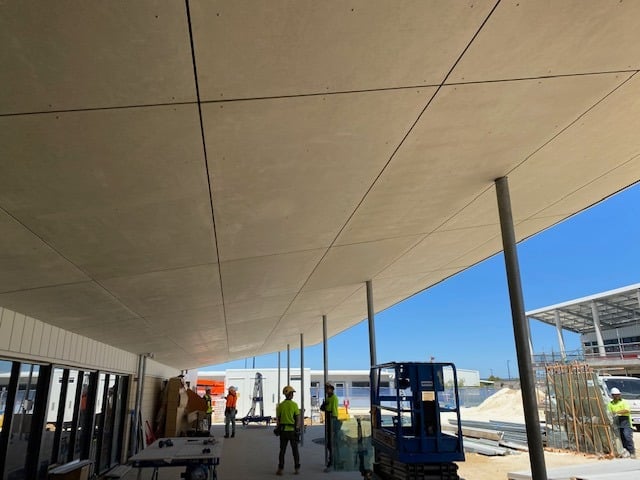
Engaging a single provider removes these duplicate costs from your tender response. This integration ensures that wall framing, door frame installation, and suspended grid systems happen in a logical sequence. The team finishes wall partitions and transitions directly into grid installation. There is no waiting for an independent trade to mobilise.
Keeping your margins from bleeding out on a Perth fit-out
A delay of two days can eat into your liquidated damages allowance. The risk increases when services trades work around uncoordinated interior subcontractors. Main mechanical runs, electrical trays, and fire services must integrate perfectly with access panels and ceiling grids.
Under a traditional structure, separate carpentry and ceiling subcontractors create an operational coordination gap. This gap frequently results in expensive variations on site. In contrast, an integrated package allows a single team to provide direct service integration under a shared supervisor. This structural adjustment protects project margins and ensures a unified schedule.
Our experienced team avoids these issues by working proactively with services engineers from day one. The site supervisor manages the partition framing alongside the ceiling installation. This coordination verifies that service penetrations align precisely with the architectural drawings. It prevents scenarios where a ceiling grid must be modified because a bulkhead was framed incorrectly.
The blame game you play when interior scopes do not talk to each other
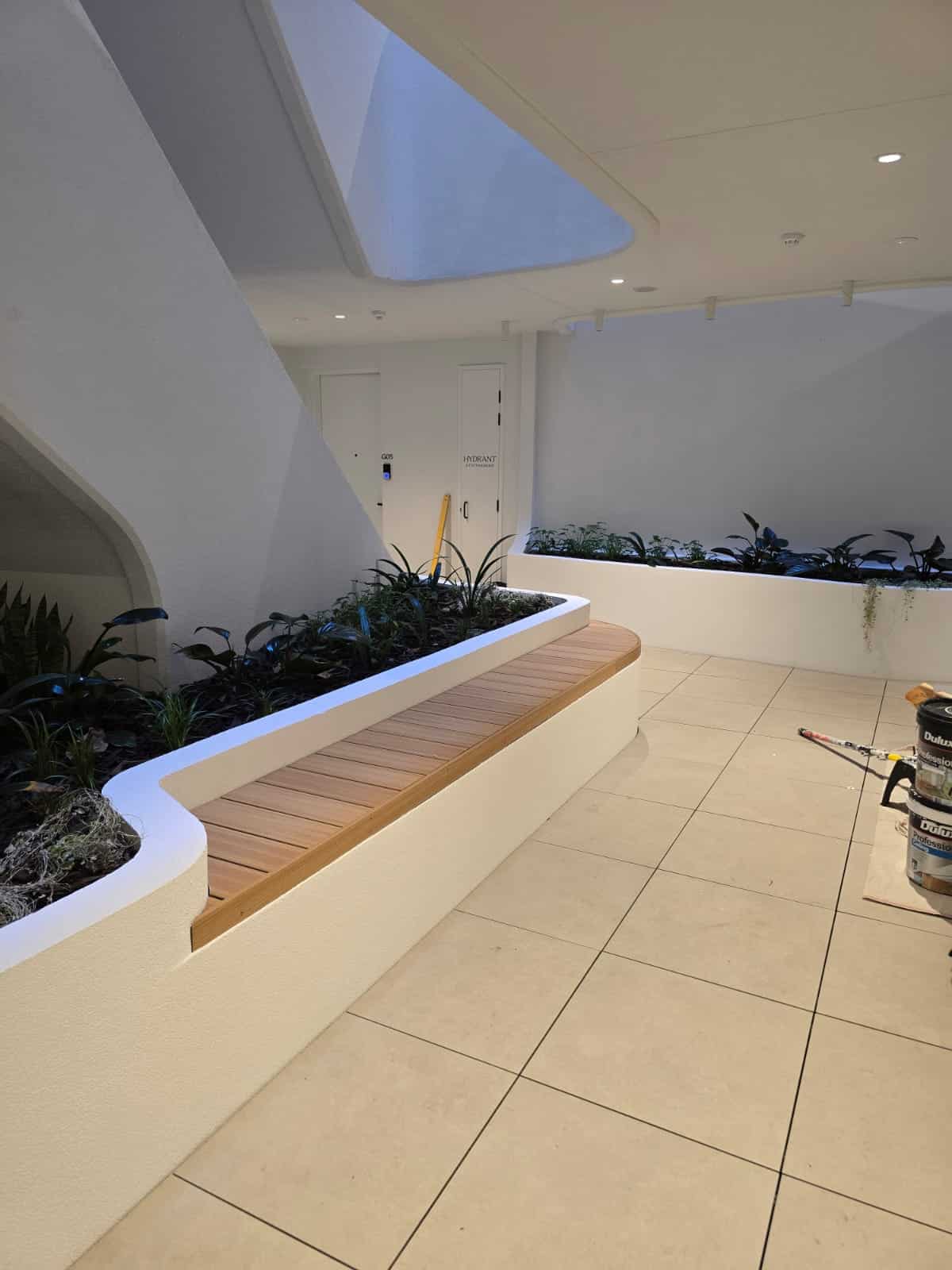
Variations frequently arise during the final stages of a fit-out when scopes are split. Installing solid timber door frames, detailed skirtings, and feature timber linings requires a precise fit against plasterboard linings. If the wall framing is slightly out of alignment, the second-fix carpentry team will struggle. Achieving a consistent finish then requires extensive remedial work.
Consolidating your interior works ensures total accountability. The team that installs the structural steel studs and plasterboard linings also secures the feature timber elements. If a tolerance issue occurs, a single site supervisor resolves it internally. This eliminates the multi-subcontractor dispute where trades blame each other for alignment errors. The main builder is no longer left to cover the cost of the rework.
Secure reliable project delivery with a single subcontractor scope
The primary goal for a contract administrator is to source a reliable trade partner. You need a partner who takes full ownership of their contract scope. BOSS brings 20 years of local commercial subcontracting experience to Western Australian building projects.
Providing integrated supply-and-install packages across carpentry and suspended ceiling systems simplifies site management. This approach protects your project margins. Get in touch with our experienced, long-tenured site crews today.